

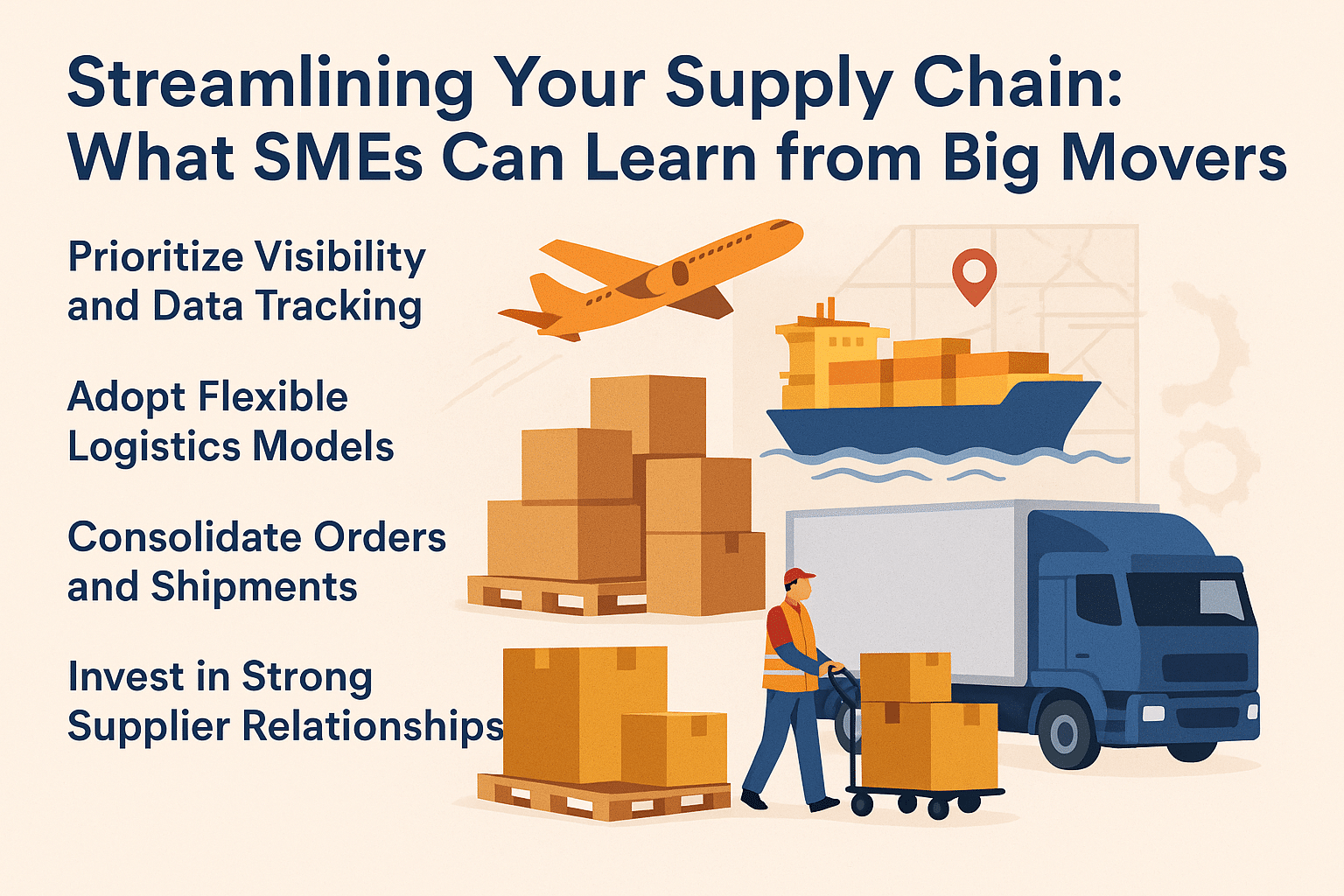
For small and medium-sized enterprises (SMEs), efficient supply chain management can be the difference between scaling successfully or being buried under operational challenges. While SMEs might not have the resources of large corporations, they can still learn valuable lessons from the logistics strategies of the world’s biggest movers.
By adopting smart practices and leveraging affordable tools, SMEs can improve efficiency, cut costs, and boost customer satisfaction—without requiring a global infrastructure. Here’s how.
Prioritize Visibility and Data Tracking
Big companies invest heavily in real-time tracking and data analytics, and for good reason—visibility helps prevent delays, anticipate issues, and refine processes over time. SMEs can replicate this by adopting inventory management software and cloud-based systems that integrate shipping, warehousing, and order fulfilment.
Start by:
- Tracking every item from supplier to customer.
- Using systems that provide alerts for delays or stock shortages.
- Analyzing logistics data monthly to spot inefficiencies.
Even low-cost digital platforms now offer dashboard tools that give SMEs insight into their entire supply chain.
Adopt Flexible Logistics Models
Large businesses know how to balance cost and speed using a mix of transport options, fulfilment centers, and strategic outsourcing. SMEs can take a page from this playbook by building a hybrid logistics model.
Instead of relying on a single carrier or warehouse, SMEs should:
- Partner with multiple couriers to diversify delivery options.
- Use third-party logistics providers for non-core areas like freight forwarding or bulky item transport.
- Consider drop shipping or just-in-time inventory to reduce storage costs.
Platforms like Shiply shipping services can connect SMEs with a wide network of transport providers, making it easier to ship oversized, fragile, or non-standard items without hiring full-time delivery teams. With flexible scheduling and competitive pricing, SMEs gain access to logistics support that scales with demand.
Consolidate Orders and Shipments
One powerful cost-saving tactic used by large companies is consolidated shipping. By grouping orders or combining deliveries from multiple suppliers, they reduce transportation costs and improve efficiency.
SMEs can benefit by:
- Scheduling shipments in bulk rather than dispatching single items frequently.
- Coordinating with other local businesses to share transport where possible.
- Working with suppliers to set up recurring, grouped deliveries.
This approach not only cuts costs but also reduces the carbon footprint—an added benefit in a sustainability-conscious market.
Invest in Strong Supplier Relationships
Big businesses often have supply chain managers dedicated to maintaining strong supplier relations. While SMEs may not have entire departments, building solid, transparent relationships with suppliers can still yield big returns.
Ways to strengthen supplier relationships include:
- Communicating forecasts and order timelines early.
- Negotiating long-term agreements to secure better pricing.
- Regularly reviewing performance and resolving issues collaboratively.
A reliable supplier network improves delivery timelines, lowers costs, and adds resilience to your operations when unexpected issues arise.
Plan for Disruptions
From pandemics to port closures, global businesses plan extensively for supply chain shocks. SMEs, though more agile, often operate reactively. Instead, a proactive mindset can minimize risk.
SMEs should consider:
- Keeping a reserve of critical stock.
- Diversifying suppliers across regions.
- Mapping out alternative shipping routes or delivery providers in case of disruption.
Resilience doesn’t require a massive budget—just thoughtful planning and access to the right tools.
Automate Where Possible
Automation is no longer reserved for enterprise-level companies. SMEs can automate repetitive supply chain tasks such as:
- Inventory updates.
- Invoice processing.
- Order confirmations and shipping notifications.
Even basic automation frees up time and reduces the chance of manual errors, improving both operational flow and customer satisfaction.
Conclusion SMEs may not match the scale of multinational corporations, but by observing and adopting the smart supply chain strategies of the big players, they can unlock significant improvements in efficiency, resilience, and cost-effectiveness. From embracing logistics platforms to forming stronger supplier partnerships and planning for the unexpected, SMEs have more tools than ever to streamline operations and compete on a larger stage.