
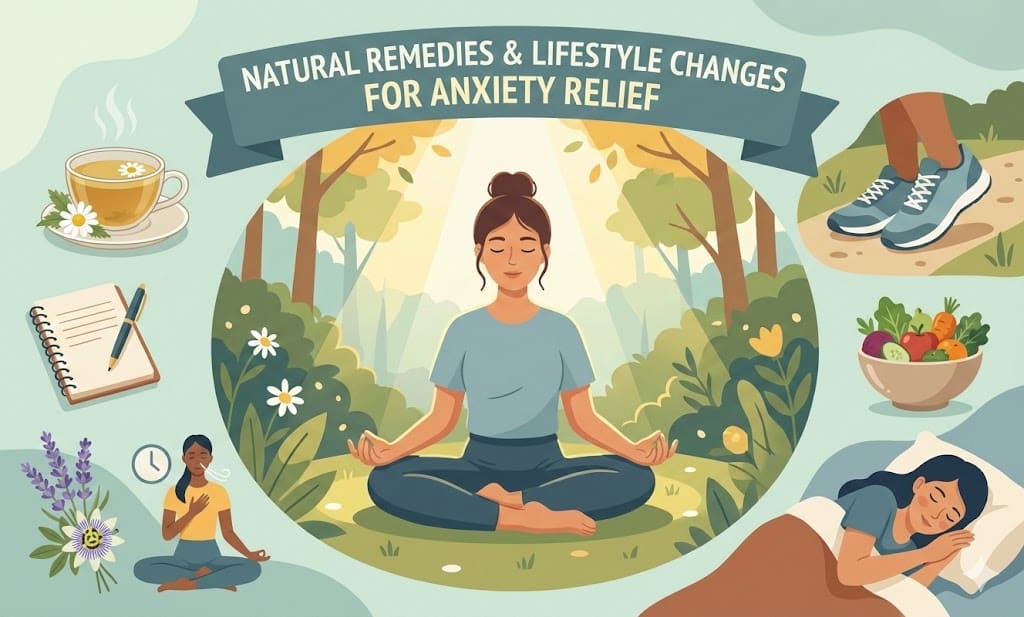
Anxietyis a normal part of life, but for many people, it becomes overwhelming and constant. When worry takes over, it can affect sleep, concentration, relationships, and overall health. While therapy and medication are effective options, many people also find relief through natural remedies and lifestyle changes. These approaches support both the body and the mind, helping create balance and resilience.
Why Natural Approaches Matter
The World Health Organization (WHO) reports that anxiety disorders affect more than 301 million people worldwide【WHO, 2022】. Although professional treatment is vital for many, daily choices also play a big role in managing symptoms. Natural remedies and lifestyle shifts empower people to take control of their well-being and reduce reliance on quick fixes like caffeine or alcohol, which often make anxiety worse.
Natural Remedies for Anxiety Relief
1. Herbal Remedies
Some herbs have calming properties that may ease anxiety:
- Chamomile: Known for its soothing effects, chamomile tea may reduce mild anxiety. A study in Phytomedicine found that chamomile extract led to significant improvements in people with generalized anxiety disorder【Amsterdam et al., 2009】.
- Lavender: Used in aromatherapy, lavender oil has been shown to lower heart rate and calm the nervous system.
- Passionflower and Valerian Root: Both are natural relaxants that may improve sleep and reduce tension.
Note: Always check with a doctor before starting herbal supplements, especially if taking other medications.
2. Breathing Exercises
When anxiety hits, the body shifts into “fight or flight” mode, making breathing shallow and fast. Deep breathing calms the nervous system and reduces symptoms.
Try this simple exercise:
- Inhale through your nose for 4 seconds.
- Hold your breath for 4 seconds.
- Exhale slowly through your mouth for 6 seconds.
- Repeat for a few minutes.
Research in Frontiers in Psychology shows that slow, controlled breathing reduces stress hormones and promotes relaxation【Ma et al., 2017】.
3. Mindfulness and Meditation
Mindfulness brings attention to the present moment, helping break cycles of overthinking. Meditation reduces activity in the amygdala, the brain’s fear center.
A meta-analysis in JAMA Internal Medicine found that mindfulness meditation significantly lowers anxiety, depression, and stress【Goyal et al., 2014】.
4. Aromatherapy
Essential oils can have a calming effect when inhaled or diffused. Popular choices include lavender, bergamot, and ylang-ylang. While not a cure, aromatherapy can provide short-term relief during stressful moments.
5. Journaling
Writing down thoughts helps release them from the mind. Journaling also increases self-awareness and provides perspective.
A study in JMIR Mental Health found that expressive writing reduced anxiety and improved well-being in participants【Smyth et al., 2018】.
Lifestyle Changes That Make a Difference
1. Regular Exercise
Exercise reduces stress by releasing endorphins, the body’s natural mood boosters. It also lowers cortisol, the stress hormone.
- Aim for 30 minutes of moderate exercise most days.
- Walking, yoga, dancing, or swimming can all help.
The Anxiety and Depression Association of America (ADAA) notes that exercise can reduce anxiety symptoms by up to 40% in some people【ADAA, 2020】.
2. Balanced Nutrition
Food impacts both physical and mental health.
- Eat more: Whole grains, lean proteins, fruits, vegetables, and omega-3 fatty acids.
- Limit: Processed foods, refined sugar, and excess caffeine.
A Mediterranean-style diet, rich in healthy fats and plant-based foods, has been linked to lower anxiety and depression【Lassale et al., Nutritional Neuroscience, 2019】.
3. Quality Sleep
Poor sleep worsens anxiety, while good sleep builds resilience.
Better sleep habits:
- Stick to a consistent bedtime.
- Avoid screens one hour before bed.
- Create a calm environment—dark, quiet, and cool.
The Sleep Foundation notes that people with insomnia are much more likely to experience anxiety disorders【Sleep Foundation, 2021】.
4. Reduce Stimulants and Alcohol
Caffeine can mimic anxiety by raising heart rate and causing jitters. Alcohol may bring temporary relief but often increases anxiety long term. Replacing these with herbal teas or water helps stabilize mood.
5. Social Support
Spending time with loved ones reduces stress and strengthens resilience. The American Psychological Association (APA) highlights that strong social support lowers stress and improves mental health outcomes【APA, 2020】.
Even small daily interactions—like a phone call or a walk with a friend—can make a big difference.
6. Time in Nature
Being outdoors lowers stress hormones and boosts mood. Even 20 minutes in a park can ease anxiety.
A study in Environmental Health and Preventive Medicine found that walking in nature significantly reduced cortisol levels compared to walking in urban settings【Park et al., 2010】.
When to Seek Professional Help
Natural remedies and lifestyle changes are powerful, but they may not be enough for everyone. If anxiety interferes with work, relationships, or daily life, professional help is important.
Therapies such as Cognitive Behavioral Therapy (CBT) and, in some cases, medication provide effective long-term relief. Combining professional treatment with healthy habits offers the best outcomes.
Conclusion
Anxiety can feel overwhelming, but natural remedies and lifestyle changes give people tools to manage symptoms every day. From herbal teas and breathing exercises to exercise, sleep, and time in nature, these practices create balance in both body and mind.