


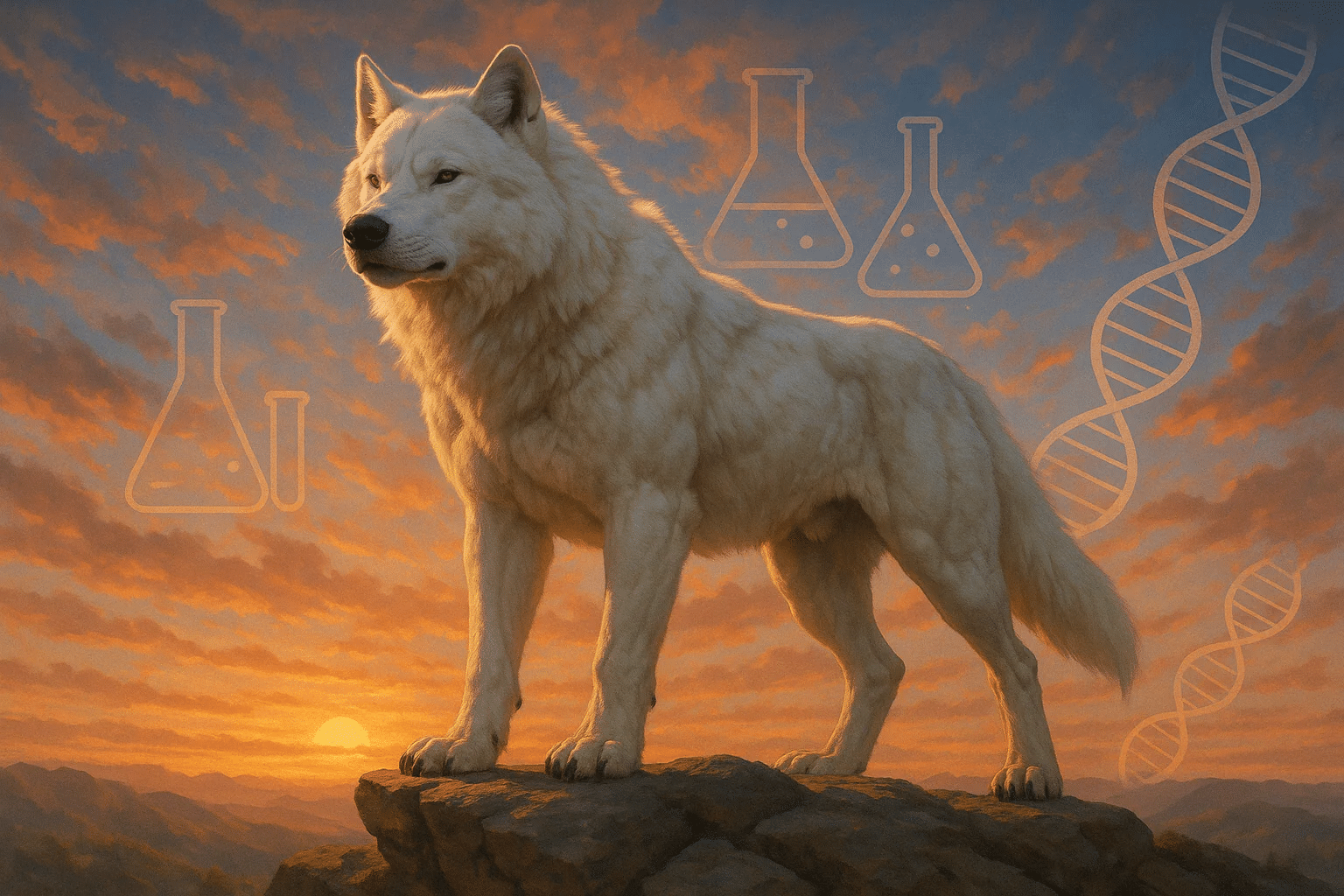
In a groundbreaking scientific achievement, Dallas-based Colossal Biosciences has successfully birthed three dire wolves, marking the world’s first true de-extinction of a species that disappeared from Earth approximately 12,500 years ago. The company, co-founded by serial entrepreneur Ben Lamm and renowned geneticist George Church, has transformed what many considered impossible into reality through advanced genetic engineering and reproductive technologies.
“This massive milestone is the first of many coming examples demonstrating that our end-to-end de-extinction technology stack works,” said Ben Lamm, Colossal CEO, in the company’s official announcement. “Our team took DNA from a 13,000-year-old tooth and a 72,000-year-old skull and made healthy dire wolf puppies.”
The three Colossal dire wolves include two male pups named Romulus and Remus, born on October 1, 2024, and a female named Khaleesi, born on January 30, 2025. The naming choices reflect both classical mythology and popular culture references, particularly from Game of Thrones, which helped reintroduce dire wolves to public consciousness.
While many people know dire wolves primarily through George R.R. Martin’s fantasy series, these animals were once apex predators across North America. Larger than today’s gray wolves, dire wolves had distinctive white coats, more muscular builds, and powerful jaws designed for crushing bones. Their extinction coincided with the end of the last ice age and the disappearance of many large North American mammals.
The science behind the dire wolf return involved analyzing genomes from ancient specimens and identifying approximately 20 genetic differences between dire wolves and gray wolves, their closest living relatives. Colossal’s scientists engineered these traits into gray wolf cells before creating embryos that were implanted into surrogate mothers. This achievement has been called the world’s first successful de-extinction of a species that vanished thousands of years ago.
The technology developed for this breakthrough has implications far beyond the resurrection of a single species. Colossal has simultaneously announced the birth of cloned red wolves, critically endangered with fewer than two dozen remaining in the wild, demonstrating how de-extinction technologies can support conservation of existing endangered species.
Currently, the de-extincted dire wolves live at a secure 2,000-acre facility at an undisclosed location, where specialists closely monitor them. According to detailed reports, the site features zoo-grade fencing and comprehensive security systems to ensure both the animals’ safety and proper scientific oversight as the company continues to study their development.
For Colossal Biosciences, the dire wolf de-extinction represents just the beginning of their ambitious conservation and restoration mission, which includes ongoing work to bring back the woolly mammoth, dodo bird, and Tasmanian tiger.


