

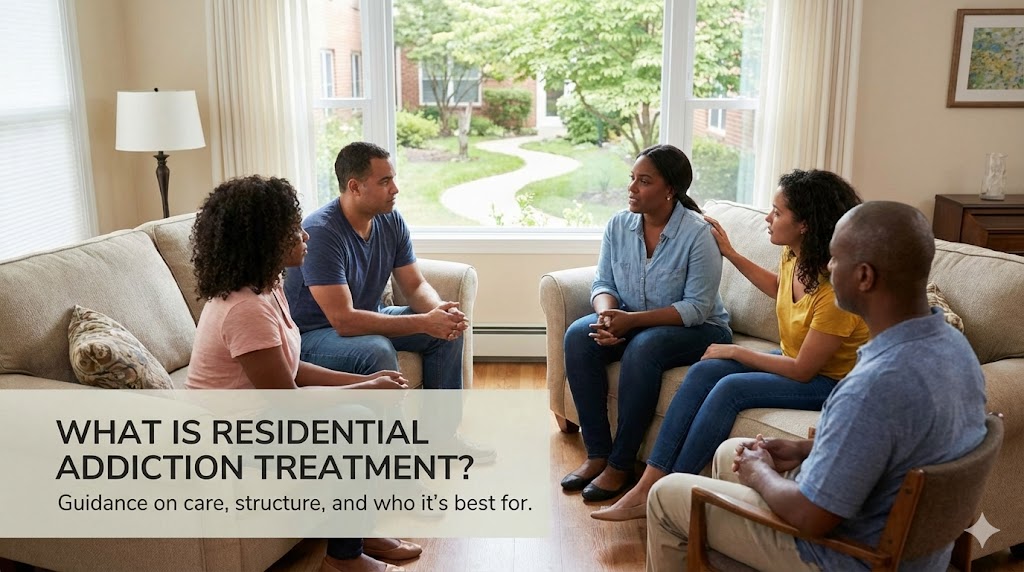
If you or someone you love is struggling with addiction, choosing the right level of care can feel overwhelming. You may hear terms like detox, inpatient, or residential treatment and wonder what they actually mean—and which option makes the most sense.
Residential addiction treatment is often recommended when substance use has become difficult to manage alone or when previous attempts at recovery have not worked. It offers structure, safety, and focused care during a critical stage of healing.
This guide explains what residential addiction treatment is, how it works, and who benefits most from this level of care.
What Is Residential Addiction Treatment?
Residential addiction treatment is a live-in treatment program where you stay at a treatment facility full-time while receiving structured care for substance use and related mental health conditions.
Unlike outpatient care, residential treatment removes you from daily triggers and stressors so you can focus fully on recovery.
Key Features of Residential Treatment
- 24/7 supportive environment
- Structured daily schedule
- Individual and group therapy
- Mental health support
- Relapse prevention planning
- Peer connection and accountability
Residential treatment is not about punishment or isolation. It’s about stability, safety, and healing in a supportive setting.
How Residential Treatment Is Different From Detox
Detox and residential treatment often work together—but they are not the same.
- Detox focuses on managing withdrawal and stabilizing your body
- Residential treatment focuses on addressing the causes of addiction and building recovery skills
According to the National Institute on Drug Abuse (NIDA), detox alone is rarely enough for lasting recovery without follow-up treatment.¹ Residential care helps bridge that gap.
What Happens During Residential Addiction Treatment?
Each program is slightly different, but most residential treatment programs include several core components.
Comprehensive Assessment
Treatment usually begins with a full assessment of your:
- Substance use history
- Physical health
- Mental health
- Trauma history
- Family and social factors
This helps create a treatment plan tailored to your specific needs—not a one-size-fits-all approach.
Daily Therapy and Structured Support
Structure is one of the biggest benefits of residential care. Your days are planned to support healing and consistency.
Common Therapies Include:
- Individual therapy
- Group therapy
- Family therapy
- Cognitive Behavioral Therapy (CBT)
- Dialectical Behavior Therapy (DBT)
- Trauma-informed therapy
These therapies help you understand patterns, manage emotions, and build healthier coping skills.
Mental Health and Dual Diagnosis Care
Many people with addiction also live with mental health conditions such as anxiety, depression, PTSD, or bipolar disorder.
The Substance Abuse and Mental Health Services Administration (SAMHSA) reports that nearly 50% of people with substance use disorders also have a co-occurring mental health condition.²
Residential treatment provides integrated care so both addiction and mental health are treated together—improving long-term outcomes.
Peer Support and Community
Living alongside others in recovery helps reduce isolation and shame. Peer support creates:
- Shared understanding
- Accountability
- Encouragement
- Hope
Recovery often feels less overwhelming when you realize you’re not alone.
]
Relapse Prevention and Life Skills
Residential treatment is not just about stopping substance use—it’s about preparing for life after treatment.
Programs focus on:
- Identifying triggers
- Managing cravings
- Building routines
- Improving communication
- Planning next steps in care
These skills help you stay grounded when you return to daily life.
Who Is Residential Addiction Treatment Best For?
Residential treatment is especially helpful for people who need more support than outpatient care can provide.
1. People With Moderate to Severe Addiction
If substance use has significantly affected your health, relationships, or ability to function, residential treatment offers the intensity and structure needed for stabilization.
2. Those Who Have Tried Outpatient or Detox Alone
If you’ve attempted to quit before but struggled to stay sober, residential care can provide deeper support and accountability.
Repeated relapse is not a failure—it’s often a sign that more structured care is needed.
3. People With Co-Occurring Mental Health Conditions
Addiction and mental health conditions often reinforce each other. Treating one without the other increases relapse risk.
According to NIDA, integrated treatment leads to better outcomes for people with dual diagnosis.¹ Residential programs are well-equipped for this level of care.
4. Individuals in Early Recovery at High Risk of Relapse
The early weeks of recovery are often the most vulnerable. Residential treatment provides a protective environment while new habits form.
5. Those Without a Safe or Stable Home Environment
If your home environment includes substance use, high stress, or limited support, residential treatment offers a stable space to heal.
6. Families Seeking Structured Help for a Loved One
Residential treatment can be a turning point for families who feel stuck or unsure how to help. Many programs include family education and therapy to support healing on all sides.
How Long Does Residential Treatment Last?
Length of stay varies depending on individual needs.
Common durations include:
- 30 days
- 60 days
- 90 days or longer
Research shows that longer treatment duration is linked to better outcomes. SAMHSA notes that staying in treatment for at least 90 days significantly improves recovery success.³
What Comes After Residential Treatment?
Residential treatment is a foundation—not the finish line.
After completing a residential program, many people step down into:
- Intensive inpatient or outpatient programs
- Medication-assisted treatment (MAT)
- Ongoing therapy
- Aftercare and alumni support
This continuum of care helps maintain progress and reduce relapse risk.
Residential Addiction Treatment in Ohio
Ohio continues to be affected by alcohol and drug use disorders, particularly opioids and alcohol. Access to residential addiction treatment in Ohio allows individuals to receive high-quality care while staying connected to regional support systems.
Local treatment can also make family involvement and long-term recovery planning more accessible.
A Final Word of Encouragement
Choosing residential addiction treatment is not a sign that things are “too far gone.” It’s a decision to give yourself—or your loved one—the time, space, and support needed to heal.
Recovery doesn’t happen overnight. But with the right environment and care, change is possible—and sustainable.
You deserve support that meets you where you are.