

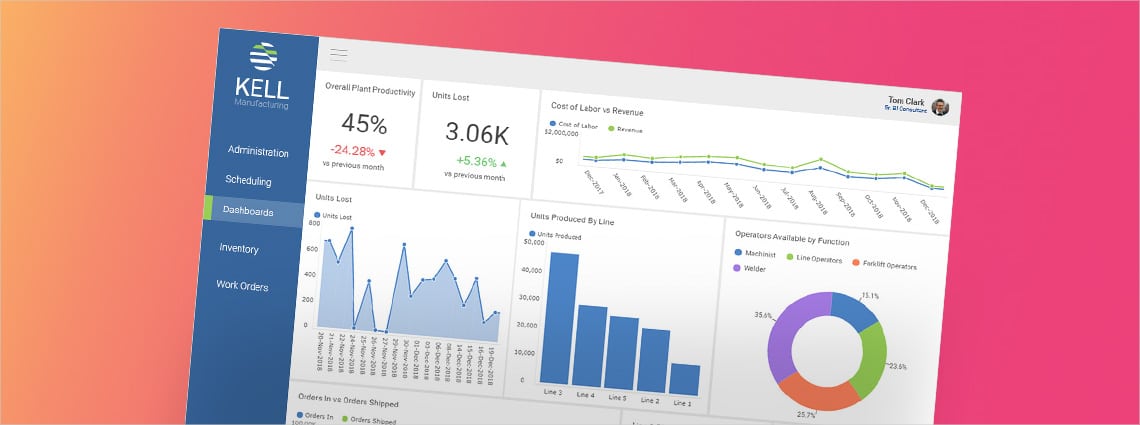
Enterprise Resource Planning (ERP) systems are the backbone of finance, supply chain, operations, and workforce management. They centralize data and processes but often leave users limited to static reports, outdated dashboards, or manual data exports to external tools for analysis. This disconnect adds friction, delays decisions, and forces teams out of their primary workflows.
Adding embedded analytics directly into your ERP transforms raw data into real-time, contextual insights where users already work. Embedded analytics empowers faster, smarter decisions by removing the need to switch between systems or wait on IT for reports. For modern ERPs, it’s not an upgrade. It’s an essential capability that makes your system a true decision-making hub.
Types of ERP Systems
The best ERP system depends on your organization’s size, deployment preferences, and industry requirements. ERP solutions typically fit into three main frameworks:
By Business Size
Small Business ERP
For startups and small companies, these systems deliver essential features at lower cost. They focus on core needs, minimize training time, and keep processes simple.
Mid-Size Business ERP
As organizations grow, they need ERPs with advanced tools for collaboration, customizable workflows, automation, and deeper analytics. These systems scale with your business to support expanding operations.
Enterprise ERP
Enterprise-grade ERPs are built for large, multi-department organizations. They handle complex, cross-functional processes and process massive data volumes, delivering a single source of truth across global operations.
By Deployment
On-Premise ERP
Installed on company-owned servers, on-premise ERPs provide full control over security, customization, and data. They’re ideal for organizations with strict compliance requirements or a need for direct infrastructure oversight.
Cloud-Based ERP
Also known as SaaS ERPs, these systems let teams access ERP functions anywhere. Cloud ERPs are flexible, reduce IT maintenance, and are managed by third-party vendors—though choosing a provider with strong data security is critical.
By Industry
Vertical ERP Systems
Industry-specific ERPs are designed for sectors like finance, retail, manufacturing, or healthcare. They include tailored features for specialized processes and regulatory needs. While often more expensive than general-purpose ERPs, they minimize the need for customization by supporting unique workflows out of the box.
Key Features of ERPs
While ERP systems vary widely, these core features are essential in most solutions:
- Integration: Connects your ERP to other systems, centralizing data and processes so teams have the right information in one place, directly in their workflow.
- Automation: Eliminates repetitive manual tasks, freeing employees to focus on higher-value work and reducing the risk of costly human errors.
- Financial Management: Tracks expenses, plans budgets, and forecasts finances to support better spending decisions and produce more accurate financial reports.
- Customer Relationship Management (CRM): Consolidates customer data so sales and marketing teams can tailor strategies, understand preferences, and improve service. Centralized customer info also makes accessing key details, like shipping addresses, quick and easy.
- Data Analysis: Delivers real-time insights from ERP data to improve decision-making and help your organization stay ahead of competitors.
- Reporting: Transforms raw data into clear dashboards, charts, and visualizations so end users can confidently act on insights.
Why Traditional ERP Reporting Falls Short
ERP systems have long excelled at storing transactional data and standardizing business processes. However, when it comes to converting that data into timely and actionable insights, traditional ERP reporting often falls short of modern business needs.
Most ERPs still depend on static reports or scheduled exports. By the time reports arrive in a user’s inbox, the data may already be stale. Ad hoc reporting options, when available, usually require specialized skills or heavy IT involvement, delaying answers to critical questions.
To gain deeper insights, many companies layer on separate BI tools. But forcing users to leave the ERP to analyze data disrupts workflows and causes context-switching fatigue, reducing the chance that insights will lead to immediate action.
The result: decisions fall behind real-world changes, user adoption of ERP analytics stays low, and organizations miss opportunities to respond quickly. In today’s fast-moving markets, these limitations make traditional ERP reporting insufficient.
What Is Embedded Analytics and How It Transforms ERP
Embedded analytics integrates dashboards, data visualizations, and advanced analysis directly into the ERP interface your users already know. Instead of forcing employees to export data or open a separate BI tool, embedded analytics delivers real-time, interactive insights within the same environment where daily work happens.
For example, an operations manager can monitor live inventory trends inside the ERP’s order entry screen. A finance leader can explore revenue forecasts right alongside transaction details without ever leaving the system. Keeping analytics in context helps users understand numbers in relation to their immediate workflows.
This approach enables faster, data-driven decisions without waiting for scheduled reports or IT assistance. Embedded analytics also lightens the load on ERP administrators and developers by empowering users to answer questions on their own. The result is a more agile organization where insights flow naturally through core systems, driving smarter actions in step with changing business needs.
How Embedded Analytics Elevates ERP
Embedded analytics transforms ERP from a static record-keeping tool into a dynamic platform for real-time decisions. It changes how teams use data and accelerates every step of the workflow. Here’s what integrated analytics unlocks:
Accelerated Decisions
Real-time insights appear inside ERP workflows, letting users act immediately without waiting for reports or switching tools.
Contextual Understanding
Data displays exactly where work happens—like sales dashboards in customer profiles or expense trends beside invoices—helping users grasp insights in context.
Higher Adoption
Embedded analytics matches the ERP’s interface, making data intuitive and encouraging regular use, unlike disconnected BI tools.
Operational Efficiency
Users explore data and build dashboards on their own, reducing support requests and freeing developers to improve core ERP features.
Strategic Agility
Live data supports faster decisions, so your organization can adapt quickly to market shifts. Embedded analytics turns ERP into a driver of growth and competitive edge.
Build vs. Buy: Embedded Analytics in ERP
When adding embedded analytics to your ERP, you can either build it yourself or integrate a purpose-built solution.
Building in-house gives you full control over design and functionality, but it demands significant time, budget, and ongoing maintenance. Developing analytics from scratch diverts developers from enhancing your ERP’s core features and requires constant updates and support.
Integrating a dedicated embedded analytics platform is faster and more cost-effective. It provides production-ready SDKs, customizable components, and built-in scalability—so you can launch analytics sooner and reduce long-term costs. It also frees your team to focus on improving ERP functionality instead of managing complex analytics infrastructure.
Choosing the right approach depends on your priorities. If analytics is central to your ERP’s unique value, building may be worth the investment. But if analytics is a critical feature users expect, integrating an established embedded analytics solution is often the smarter, faster choice.
Conclusion
Embedded analytics turns ERP systems from static data repositories into powerful decision-making tools. By integrating analytics directly into your ERP interface, you give users immediate, actionable insights without disrupting their workflows. This leads to faster decisions, better user adoption, and a stronger competitive position.
Today, embedded analytics is essential for any organization that wants to maximize the value of its ERP investment. It helps businesses respond quickly to market changes, improve efficiency, and unlock new opportunities for growth.
Adding embedded analytics isn’t just an upgrade. It’s a strategic move that aligns your ERP with modern expectations and empowers your users to make smarter decisions every day.